If you know anything about me you know that my dog is my best friend in the world. I love her so much and I would do anything for her. Today, that included beating a vicious dog off of her that attacked her in our yard.
The dog still got her good though. She has broken blood vessels in her eyes, several puncture wounds, and a hole though her jaw.
I am so so sad and I’m crying writing this because my sweet sweet puppy lost a little of her spark today. She is the happiest, most loving girl and today she is fragile and scared after being attacked viciously by a much larger dog. It breaks my heart to see her this way.
I’m writing this because I need help to make sure that my little girl can be cared for. She needs surgeries to seal up the open wounds in her face and give her the necessary medication to heal her eyes so she doesn’t lose half her vision. I am a college student and a freelance designer, so I don’t have the extra $965 to make sure that my little girl is okay.
So I ask if you can give anything at all, even $1 or $5 to help my little family, it would mean the world to us during this very scary situation. I can make edits, designs for anyone who donates to show my appreciation.
This would mean so much to my baby girl and make sure that she doesn’t have medical complications for the rest of her life.
With this post I listed 10 outline techniques to help writes move their story from a basic idea to a complete set of arcs, plots, sequences and/or scenes. Or to simply expand whatever you have in hands right now.
If you have a vague story idea or a detailed one, this post is for you to both discover and organize. A few technique will work perfectly. A few won’t. Your mission is to find the one that works best for you. That said, I advice you to try out as many techniques as possible.
So, are you ready? Open your notebook, or your digital document, and let’s start.
1. Snowflake method: Start with a one-sentence description of the novel. Then, develop this simple phrase into a paragraph. Your next step is to write a one-page summary based on the paragraph, you can write about characters, motivations, goals, plots, options, whatever you feel like. From this point on, you can either start your book or expand the one-page summary into four pages. And, at last, four pages into a brief description of known sequences of scenes. Your goal is to make the story more and more complex as you add information, much like a forming snowflake.
2. Chapter by chapter: List ten to twenty chapters, give each chapter a tittle and a brief description of what should happen. Then, break each chapter into three to five basic sequences of scenes. Give each sequence a title, a brief description and a short list of possibilities (possibilities of dialogues, scenarios, outcomes, moods, feelings… just play around with possibilities). From this point on, you can either create the scenes of sequences with a one-sentence description for each or jump straight to writing. Your goal is to shift from the big picture to a detail-oriented point of view.
3. Script: This might sound crazy, but, with this technique, you will write the screenplay of your story as if it’s a movie. No strings attached to creative writing, just plain actions and dialogues with basic information. Writing a script will take time, maybe months, but it will also enlighten your project like no other technique. Your goal is to create a cinematic view of your story. How to write a script here.
4. Free writing: No rules, no format, no step, just grab a pen or prepare your fingers to write down whatever idea that comes up. Think of possibilities, characters, places, quests, journeys, evolutions, symbolisms, fears, good moments, bad moments, clothing, appearances. Complete five to ten pages. Or even more. The more you write, the more you will unravel. You can even doodle, or paste images. Your mission is to explore freely.
5. Tag: This technique is ideal if you have just a vague idea of the story. Start by listing ten to fifteen tags related to the story. Under each tag, create possible plots. And, under each plot, create possible scenes. Grab a red felt pen and circle plots and scenes that sparkle your interest.
6. Eight-point arc: With this technique you will divide your story into eight stages. They are Stasis, Trigger, Quest, Surprise, Critical Choice, Climax, Reversal and Resolution. The Stasis is the every-day-life of your main character. Trigger is an event that will change the every-day-life of your character (for better or for worse). Quest is a period of your main characters trying to find a new balance, a new every-day-life (because we all love a good routine). Surprise will take your character away from their new found every-day-life. Critical Choice is a point of no return, a dilemma, your character will have to make the hardest decision out of two outcomes, both equally important. Climax is the critical choice put to practice. Reversal is the consequence of the climax, or how the characters evolved. Resolution is the return to a new (or old) every-day-life, a (maybe everlasting) balance.
7. Reverse: Write down a description of how your story ends, what happens to your characters and to those around them. Make it as detailed as possible. Then, move up to the climax, write a short scenario for the highest point of your story. From there, build all the way back to the beginning.
8. Zigzag: Draw a zigzag with as many up and downs as you want. Every up represents your main character moving closer to their goal. Every down represents your main character moving further from their goal. Fill in your zigzag with sequences that will take your character closer and farther from the goal.
9. Listing: The focus of this technique is exploring new ideas when your story feels empty, short or stagnated. You’ll, basically make lists. Make a long list of plot ideas. Make another list of places and settings. Make a list of elements. And a list of possible characters. Maybe a list of book titles. Or a list of interesting scenes. A list of bad things that could happen inside this universe. A list of good things. A list of symbolism. A list of visual inspiration. A list of absurd ideas you’ll probably never use. Then, gather all this material and circle the good items. Try to organize them into a timeline.
10. Character-driven: Create a character. Don’t worry about anything else. Just think of a character, their appearance and style. Give them a name. Give them a basic personality. Give them a backstory. Develop their personality based on the backstory. Now, give this character a story that mirrors their backstory (maybe a way to overcome the past, or to grow, or to revenge, or to restore). Based on your character’s personality, come up with a few scenes to drive their story from beginning to end. Now, do the same thing for the antagonist and secondary characters.
So, when is it time to stop outlining and start writing?
This is your call. Some writers need as many details as they can get, some need just an basic plot to use as a North. Just remember, an outline is not a strict format, you can and you will improvise along the way. The most important is being comfortable with your story, exploring new ideas, expanding old concepts and, maybe, changing your mind many times. There’s no right or wrong, just follow your intuition.
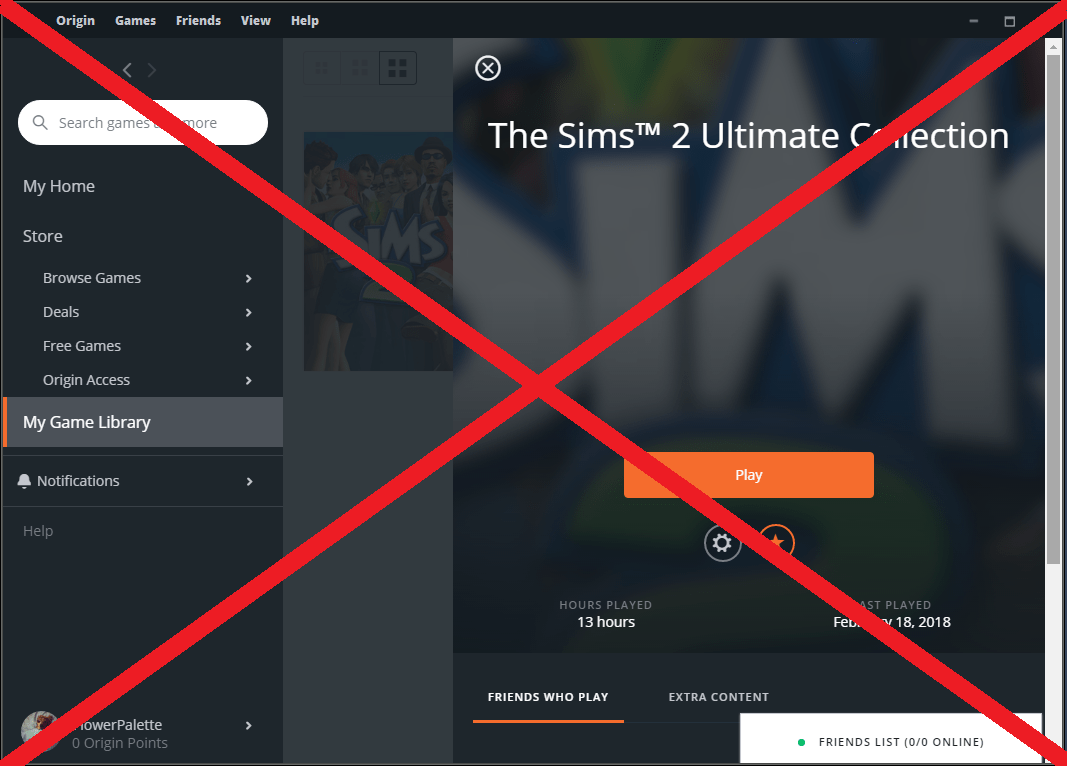
This is a method I use to work out what the problem is. Basically,
it’s about finding which folder is the problem, by getting a working
game, and then replacing the folders one by one from the broken one
until it stops working again. Then you know what the problem is, and you
can fix that folder.
Save your game and regenerate a clean one.
1. make a copy of your game for saving purposes (that’s the whole
sims 2 folder) and save it somewhere safe so if you stuff up your game,
you can go back to the original configuration and start again.
2. rename your old folder – ‘The Sims2 – broken game’ 3. regenerate a fresh new game. Load game to menu. Remember to delete your cache each time.
Does it load? – then it’s not your program install. If it doesn’t load? Then re-install your game.
Check your neighborhoods folder
4. Come out of your game. We’ll call this game load TEMP from now
Go to EA GamesThe Sims 2Neighborhoods and delete this folder from TEMP.
5. Copy EA GamesThe Sims 2 – broken gameNeighborhoods
to EA GamesThe Sims 2 Neighborhoods
6. Load up your game. Remember to delete your cache each time.
Does it load? – then it’s not your hoods. If it doesn’t load? Then
your hood is the problem. We already know that the other folders are ok
because of steps 3-4.
7. Delete your collections folder from Temp, and Add it from broken.
8. Load up your game. Remember to delete your cache each time.
Does it load? Then the collection is not the problem. If it doesn’t
load – then there’s a corrupt collection. (This happened to me, so it’s
worth checking).
Check your Downloads folder
9. Add your Downloads folder from broken. Your Temp game won’t have a downloads folder.
10. Load up your game. Remember to delete your cache each time.
Does it load? Then the downloads are not the problem. If it doesn’t load now – then there is a conflict with something outside the download folder which is changing the game. You’ll need to regenerate a clean version again, and then do the 50-50 search to find the download that is causing the problem.
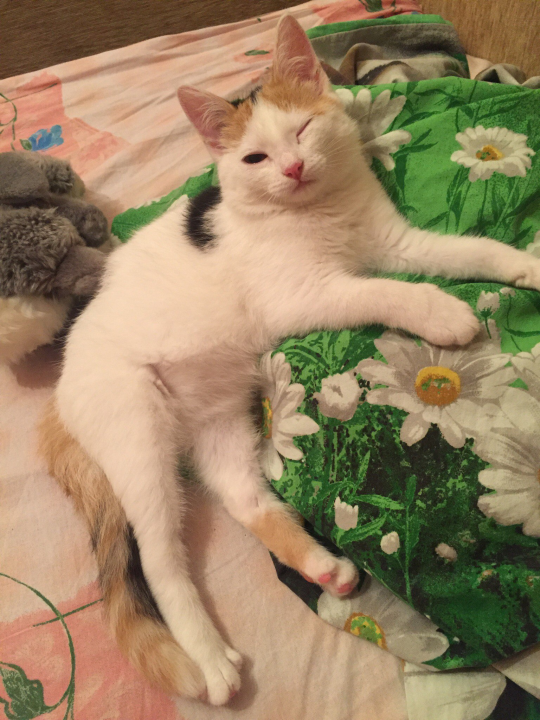
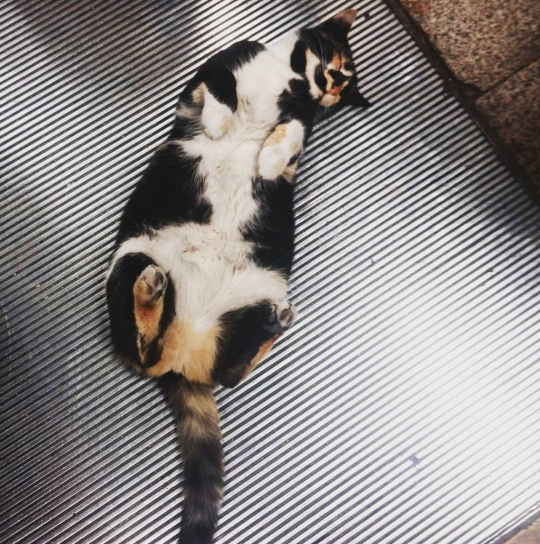
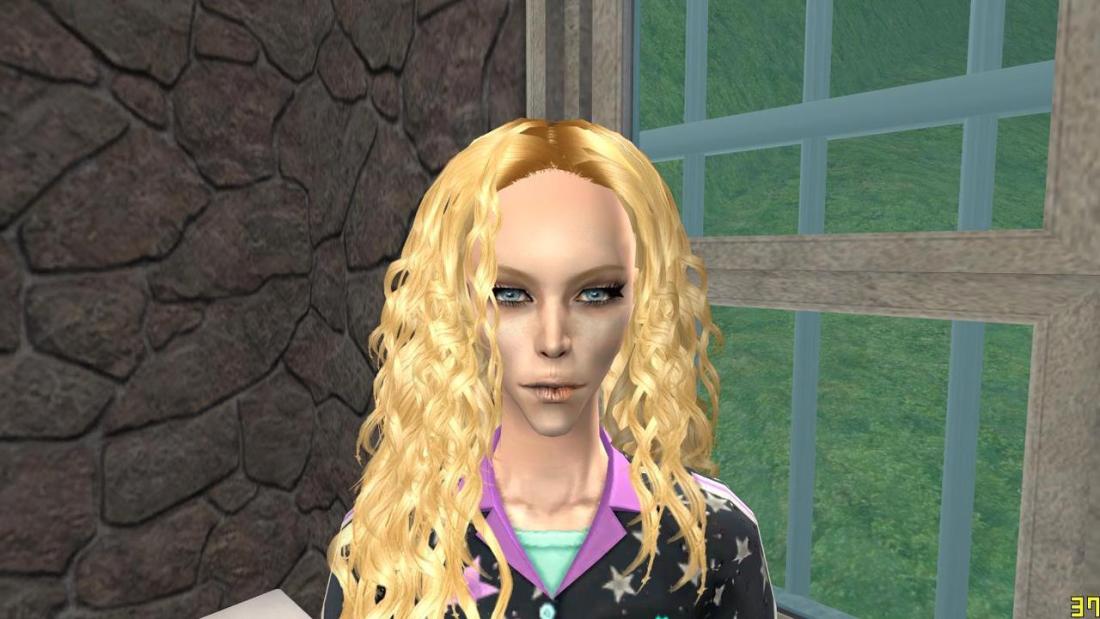
She isn’t the cutest little girl, her eyes are weird, she might need plastic surgery later.
• It’s annoying. • It gives an imperfect metric for how many followers you have. (I would estimate about 25% of my “followers” are porn blogs run by bots). • It makes pulling up your activity page iffy even if you use Tumblr strictly for SFW content. • It’s problematic for individuals who have struggled with sex and/or pornography addictions, especially since many of the blog names are not obviously porn names, causing you to preview the blog. • It exposes minors to illegal and harmful content.
And to many of us: • It’s disgusting. • it’s degrading to human beings, especially women. • It makes Tumblr a less classy, less reputable place.
Please share this if you agree this is a serious problem.
It’s really amazing to see how many people are reblogging this and identifying with it. Honestly I felt like I was in the tiny minority of people who hate getting porn shoved in their faces, but there’s a lot more activity than I anticipated. It just goes to show we’re more alike than we think. Thank you!
They’re too busy messing up the rest of the site to care, but REBLOG.
Please! I can’t even pull up my blog to show friends and family sometimes without fear of some pornographic image popping up on my dashboard.
100% truth. dear staff, please notice this.
Please reblog this…
Please reblog this, there are a lot of those disgusting blogs lately…
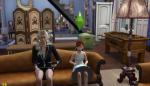
Some stand-ins, Odon De Jarjalles and Sanche De Longpré De Granbois.
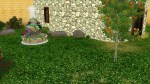
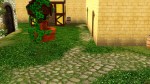
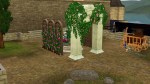
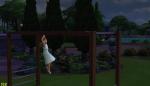
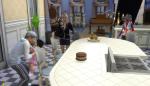
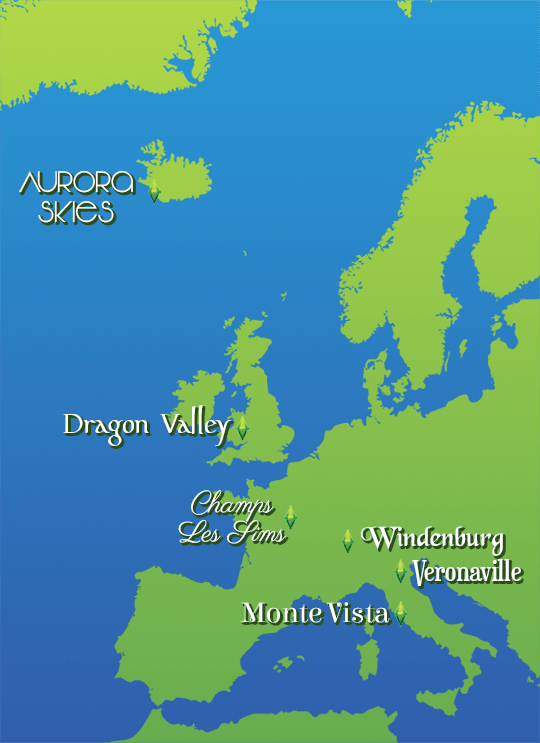
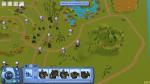
I thought it’d be fun to put the Sims worlds (from The Sims 2, 3 and 4) on the map of Europe, based on the real life locations that inspired them (and I’m always keen to download new fonts!) There are a couple of liberties taken here, so if you’re curious, here are my reasons behind these choices…
Aurora Skies: pretty much confirmed to bebased on Iceland, along with a few other North-European influences
Dragon Valley: this one is less definite, but given the town’s history and the fact Wales has a dragon on its flag, I thought it fit well. (I do imagine Dragon Valley to be in a different era to the rest of these worlds)
Champs Les Sims: not too difficult to place, somewhere in France but close to Paris (given its view of the Eiffel Tower)
Windenburg: hard to pinpoint as it is based on many different European styles. I settled on this location somewhere between Geneva (with the Jet d’Eau homage on Lake Windenburg) and southern Germany
Veronaville: yeah, not going to lie, I just put it near Verona. Sue me. The Tudor style side is definitely more English… but come on, the clue’s in the name. Veronaville.
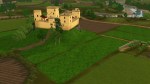
Monte Vista: somewhere in Tuscany, near Monteriggioni and other walled/mountain top cities
Let’s start with a little thingy first: slow-burns, when done well, are my favorite thing to read. I love the suspense that comes with them, that feeling when you know they’re going to get to together but you’re on the edge of your seat wondering if it’ll happen anyway. That stuff melts my heart, so I’m really, really happy that you sent this.
What is a slow-burn?
Slow-burns are great because they work both as a main or a subplot. They’re extremely character-oriented romances that take a while (usually an entire book or, in some cases, an entire series) to develop. Oh, and they have a talent for making people like me freak out over every little detail.
From a writer’s perspective, a slow-burn is a pain in the neck. You want everything to go at the right pace with the right chemistry enough that it seems like everything happens naturally. You don’t want things to go too slow or too fast, but you don’t want the reader to be rushed or bored either. Two characters are needed that would making a slow-burn seem worth it to pursue, and there lies the issue.
Is there a way to block some words in the titles and the texts ? I know it’s possible to block some tags with tumblr savior, but I don’t know if it’s possible with the texts.
Is there a way to block some words in the titles and the texts ? I know it’s possible to block some tags with tumblr savior, but I don’t know if it’s possible with the texts.















































































































 Lilysimsgames